
GHK-Cu: The Midlife Peptide Your Skin Has Been Missing (and Why It’s Not Just About Wrinkles)
I’ll start with a confession.
I did my skin dirty in my younger years.
Sun worshipping. Tanning beds. Zero sunscreen. All while rocking a freckled, fair-skinned, Irish-mutt genetic situation that had absolutely no business spending that much time in the sun. 🙃
Fast-forward to midlife and… shocker. Skin starts asking for backup.
So, since I went down the peptide rabbit hole GHK-Cu popped up.
What exactly is GHK-Cu?
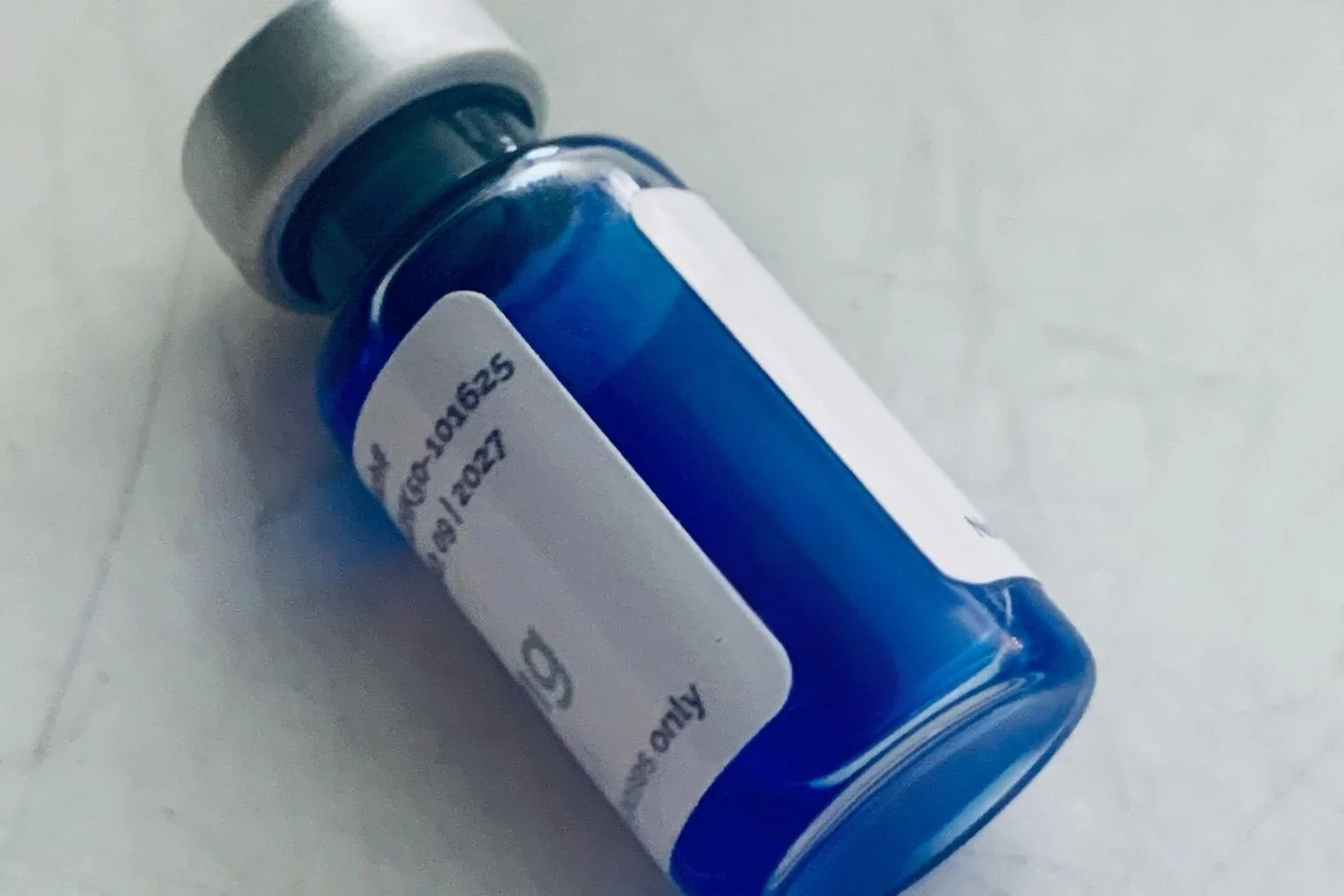
GHK-Cu is a naturally occurring tri-peptide made of three amino acids
glycine + histidine + lysine, bound to a single copper ion.
When we’re young, our bodies make plenty of it. As we age, like most things, production drops.
And when GHK-Cu drops, things like collagen production, skin repair, and overall tissue regeneration start slowing down too.
Remember the difference between peptides and medications is that they don’t force anything. They work with the body not against it by giving instructions or signals to activate the body’s natural functions.
How GHK-Cu supports healthy skin
GHK-Cu has been studied for its role in:
Supporting collagen and elastin synthesis
Helping maintain skin firmness and elasticity
Supporting fibroblast activity (the cells responsible for building skin structure)
Encouraging the skin’s natural repair processes
Again, it reminds aging skin cells how to do their job again.So, all of those not-so-fun little midlife signs you’re noticing:
Crepey / thinning skin
Slower healing
Loss of firmness
And that “my skin just isn’t bouncing back like it used to” feeling
Copper peptides can help.
Loose skin + GLP/GIP weight loss?
I’m seeing more Jet Plasma clients coming in for this exact reason.
If you’re on a GLP-1 or GIP peptide and losing weight, you’re already familiar with the “yay fat loss… but wait” moment.
As fat mass decreases, skin doesn’t always get the memo fast enough.
GHK-Cu has been studied for its ability to signal fibroblasts to start building again, which is exactly what you want when skin needs support keeping up with body changes.
It’s not a magic eraser. But it does help restore communication.
GHK-Cu isn’t just a skin peptide
Here’s the cool thing I’m learning about this peptide.
It works way beyond skin. GHK-Cu has been researched for its role in supporting:
Tissue repair and regeneration
Muscle recovery 💪
Wound healing pathways
Broader connective tissue health
It supports repair wherever the body needs it!
What about hair and scalp health?
GHK-Cu has also been explored for its role in:
• Supporting scalp health
• Encouraging hair follicle activity
• Creating an environment that supports hair growth cycles
This is why you’re seeing it show up in topical scalp products and injectable protocols.
A quick note on timing and peptide blends
A question I have after hearing this floating around from a few influencers…
Are copper peptide blends (KLOW, GLOW, etc.) a good idea?
What I’ve heard…
Copper ions are biologically active. That’s part of what makes GHK-Cu effective. But that same copper ion can possibly interact with and destabilize other peptides when mixed or made into a blend.
What we know:
GHK-Cu has a short half-life (about 30 minutes to 1 hour)
Copper ions can bind in ways that might reduce the stability or effectiveness of other peptides
When it comes to topicals, it’s always recommended to avoid using GHK-cu with Vitamin C or other acid compounds.
My thoughts…for now, I’m personally staying away from copper blends and sticking with intentional timing until I hear differently. Peptides are an investment, so why risk wasting your money?
Bottom line
GHK-Cu is one of the most well-researched peptides we have for skin integrity, tissue repair, and regenerative signaling, especially in midlife.
It doesn’t replace foundations.
It works with them.
And yes, my sun-fried younger self wishes this existed back then. But I’ll take the wisdom now. 😉
Curious if peptides could help you?
👉 Reach out if you want help deciding what actually fits your skin and health journey.
This information is for educational purposes only and is not intended to diagnose, treat, or cure any condition. Always consult with a licensed healthcare provider before starting any new supplement, medication, or health protocol. GLP-1s are FDA-approved for specific conditions, but microdosing is considered off-label.